Reviewed by Shara Bierman, Registered Insurance Broker at Strong Roots Insurance Brokers Ltd. and current Chair at the Insurance Brokers Association of Ontario.
Winter in Ontario brings crisp mornings, snow-covered rooflines, and quiet evenings by the fire. But when temperatures climb above freezing and rapid thaws set in across communities like Stratford, St. Marys, New Hamburg, and Elmira, homeowners encounter a very different seasonal challenge: water intrusion.
From heavy snow loads and hidden ice dams to water pooling around your foundation, unmanaged winter moisture can quickly turn into costly repairs. Worse yet, many homeowners discover too late that standard home policies do not automatically cover every type of water loss.
At Strong Roots Insurance Brokers, we believe in building your protection on a solid foundation. As your neighbours and local insurance advocates, we are here to help you navigate winter risks with confidence.
Here is your practical guide to safeguarding your home against winter water damage—along with a straightforward look at how Ontario property policies actually treat water claims.
Winter Water Damage Prevention Checklist
Proactive maintenance is your first and best line of defence against freeze-thaw water issues. Taking these steps can save you time, stress, and substantial out-of-pocket expenses.
1. Snow Load & Rapid Melt
Heavy, wet snow accumulation places excessive downward weight on your roof structure. When a winter thaw hits, this snow melts quickly, often overwhelming exterior drainage paths.
- Clear excess accumulation: Use an extendable roof rake safely from the ground to pull snow off lower roof sections. For high-pitch or multi-storey rooflines, hire an insured professional.
- Maintain runoff corridors: Shovel pathways along exterior walls so melting snow drains downhill rather than pooling against your foundation brickwork.
2. Ice Dams: The Silent Threat
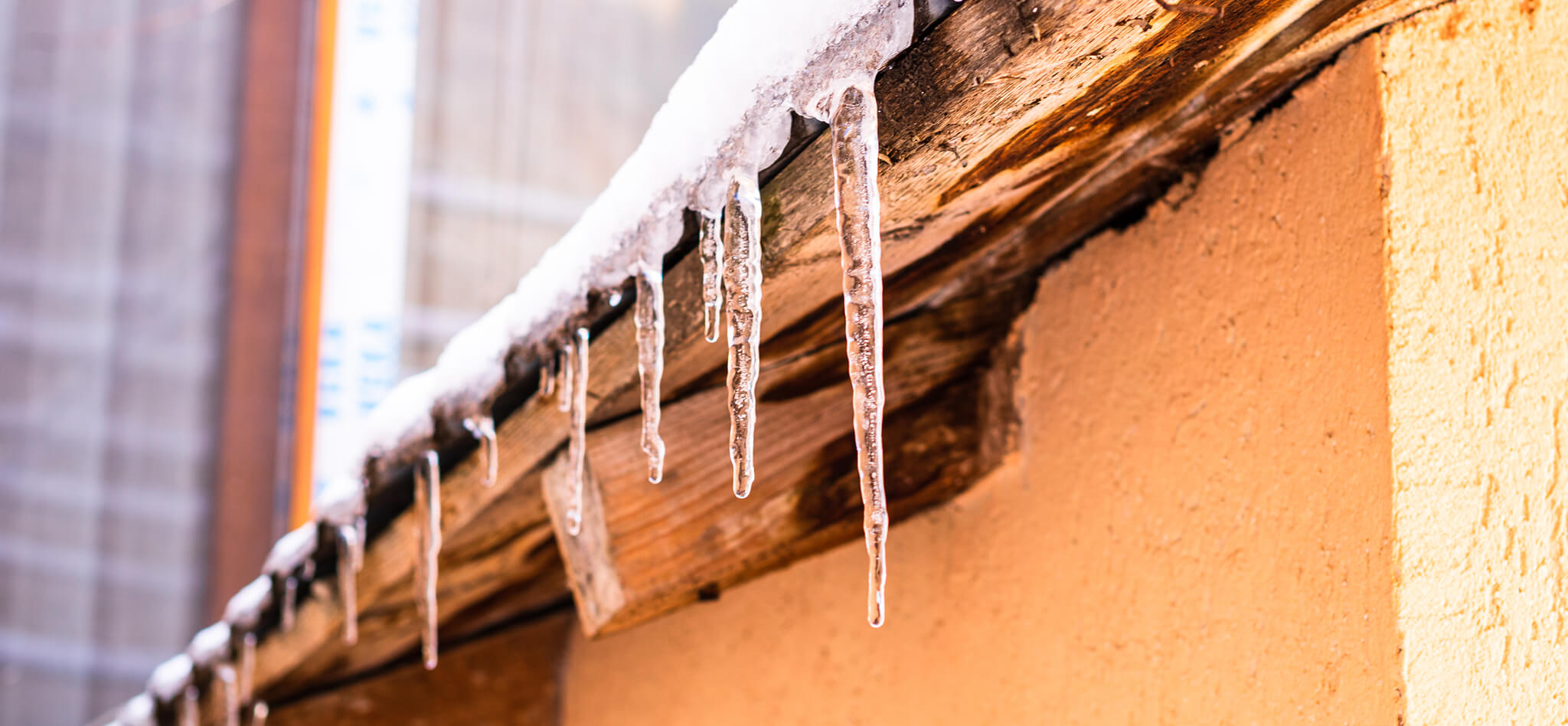
Ice dams form when warm indoor air escapes into an under-insulated attic, heating the upper roof deck and melting snow from beneath. As runoff reaches the cold eaves and gutters, it refreezes into a thick barrier of ice. Water pooling behind that dam eventually backs up underneath shingles, making its way into attic insulation, ceiling drywall, and interior walls.
- Improve attic ventilation and insulation: Keep your attic floor well-insulated and soffit vents clear to maintain a cool, consistent roof deck temperature.
- Clean gutters before freeze-up: Ensure eavestroughs and downspouts are cleared of fallen leaves and debris so melting runoff can exit freely.
- Choose the right melting agents: Avoid rock salt, which corrodes metal gutters and strips shingle granules. Instead, use roof-safe calcium chloride ice melt products.
- Consult industry guidance: Review preventative property guidelines from the Insurance Bureau of Canada (IBC) to ensure your seasonal maintenance stays aligned with insurer requirements.
3. Clearing Downspouts and Drainage Paths
When sudden warm weather arrives, water will always take the path of least resistance. Blockages around your property force water back toward your basement walls.
- Eavestroughs and downspouts: Check that downspout extensions are securely attached and direct runoff at least 6 feet away from foundation walls.
- Storm grates and drains: Clear away packed snow, road slush, and debris from perimeter yard drains and nearby municipal sewer grates.
- Driveways and walkways: Direct cleared snowbanks away from the house rather than piling snow against basement windows or exterior brick veneer.
4. Sump Pumps & Backwater Valves
Basement water backup is one of the most common and disruptive winter claims in Ontario. Two pieces of equipment serve as your primary protection:
- Sump Pump Maintenance: Locate the pit in your basement and pour in a bucket of water to ensure the float switch activates the pump. Because severe winter storms frequently knock out electrical power right when runoff peaks, installing an auxiliary battery backup system is critical.
- Backwater Valve Inspection: Installed on your main sanitary sewer line—usually under an access panel in your basement floor—a backwater valve allows wastewater to exit while mechanically blocking municipal sewer water from pushing back into your home during a surcharge. Check the valve periodically to ensure the flapper moves freely and is clear of debris.
3 Larger Structural Vulnerabilities to Watch
Beyond routine seasonal clearing, three larger property issues can leave your home vulnerable to water intrusion:
- Foundation Cracks at Ground Level: As surrounding soil freezes and thaws, frost heaves can widen hairline fissures in concrete or masonry. Melting groundwater then seeps through the wall. Inspect your basement and foundation walls each season, sealing visible cracks with hydraulic cement or epoxy injection before spring arrives.
- Improper Yard Grading: When your yard slopes toward the home or has low sunken spots next to exterior walls, snowmelt pools directly against basement concrete. Regrading borders or installing gravel-lined French drains directs surface water safely away from your home.
- Leaking Window Wells: Low basement window frames without adequate drainage wells act like basins during rapid melts. Clear out accumulated leaves, verify that gravel beds drain freely, and fit sturdy polycarbonate covers over the wells.
While resolving grading or foundation issues requires more effort and investment, addressing them early prevents chronic structural dampness that standard insurance does not cover.
Does Home Insurance Cover Water Damage in Ontario?
Water damage is one of the most misunderstood areas of Ontario property insurance. Many homeowners assume that any water issue is automatically covered, only to discover significant exclusions when filing a claim.
In Ontario, water damage is split into distinct categories, each requiring specific policy conditions or endorsements:
1. Sudden & Accidental Internal Leaks (Standard Base Policy)
Almost all comprehensive homeowner and tenant policies include coverage for sudden, accidental water escape originating inside the home. Examples include a burst frozen indoor plumbing pipe, a ruptured water heater tank, or a detached washing machine supply hose.
- Keep in mind: The policy pays to repair the resulting damage to your floors, ceilings, and drywall. It generally does not cover the cost to repair or replace the appliance or plumbing pipe that failed.
2. Ice Dam Damage (Interior vs. Exterior)
When an ice dam forces water under roof shingles and damages your ceilings, walls, or personal belongings, most comprehensive home insurance policies cover the interior repairs. However, standard policies typically do not cover the cost to remove the ice dam itself or repair worn shingles, as that falls under routine home maintenance.
3. Sewer Backup Coverage (Optional Endorsement)
When melting snow or intense rainfall overwhelms municipal sewer infrastructure, raw water and sewage can back up through basement drains, toilets, and utility sinks. Standard baseline policies do not automatically cover sewer backup. This protection requires an optional endorsement. Because a single basement backup can easily exceed $30,000 to $60,000 in cleanup, sanitization, and reconstruction costs, ensuring you have sufficient policy limits is essential.
4. Overland Flood Insurance (Optional Endorsement)
Overland water coverage protects against freshwater entering your home at ground level, such as surface runoff from rapid winter snowmelt, overflowing local rivers, or pooling street water entering through low doors or window wells. Like sewer backup, overland flood coverage is an optional rider that must be added to your policy.
5. What Is Excluded?
Gradual seepage, ongoing leaks, rising groundwater table seepage through basement floors, mould, and continuous dampness caused by lack of maintenance are excluded by major Canadian insurance carriers. Insurance is designed for sudden, unforeseen events—not gradual wear and tear.
Comparing Water Coverage Scenarios
| Winter Incident | Standard Base Policy | With Sewer Backup Endorsement | With Overland Flood Endorsement |
| Burst Indoor Water Pipe | Covered | Covered | Covered |
| Ice Dam Forcing Water into Ceiling | Covered (Interior damage) | Covered | Covered |
| Municipal Sewer Backs Up into Basement | Not Covered | Covered | Covered |
| Sudden Snowmelt Runoff Through Window Well | Not Covered | Not Covered | Covered |
| Gradual Ground Seepage Through Wall Crack | Excluded (Maintenance) | Excluded | Excluded |
Why Independent Broker Advice Matters for Water Protection
When shopping for insurance online or using direct-writer quote tools, algorithms frequently default to minimum water sub-limits (such as $10,000 for sewer backup) or omit overland flood endorsements entirely to display a lower monthly premium. If your home features a finished basement with family living spaces, a home office, or expensive mechanical systems, a low sub-limit could leave you facing significant out-of-pocket costs after a major thaw.
As an independent brokerage, Strong Roots Insurance Brokers works for you—not a single insurance company. We take the time to evaluate your property’s specific location, municipal drainage conditions, and finished basement value. By comparing options across multiple top-rated Canadian insurance carriers, we help ensure your policy has the exact endorsements you need at competitive rates.
All Ontario residential policies follow regulatory standards overseen by the Financial Services Regulatory Authority of Ontario (FSRA). Our role as licensed Registered Insurance Brokers of Ontario (RIBO) members is to ensure your coverage delivers real peace of mind when weather turns extreme.
Protect What Matters Most with Strong Roots
Whether your home is located in Stratford, Kitchener, Cambridge, Guelph, Listowel, or rural Perth and Oxford counties, keeping your home safe requires both proactive seasonal maintenance and dependable insurance backing.
If you are unsure whether your current policy includes sewer backup, overland flood protection, or adequate coverage limits for your finished basement, our dedicated team is here to help. We will review your policy schedule, explain your coverage in straightforward terms, and make sure your home is properly protected from the ground up.
Ready to review your winter water coverage?
Explore your home insurance options with Strong Roots or call our local brokerage team today for a tailored policy review.